Building in Bushfire Hazard Areas: BAL, AS3959, NCC & Sunshine Coast Requirements
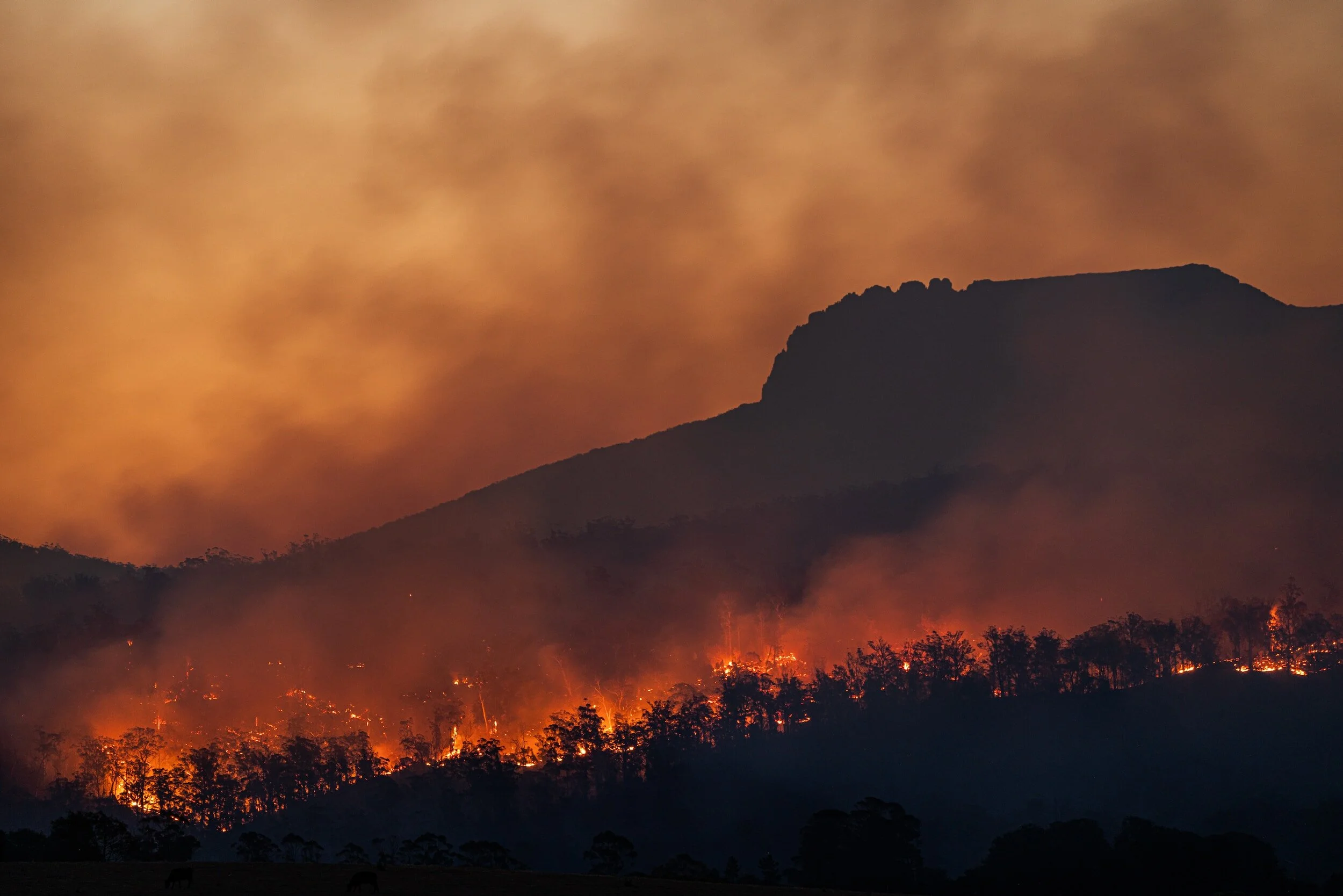
As Australia gears up for another bushfire season, the importance of understanding the Bushfire Attack Level (BAL) in building design and construction cannot be overstated.
Designing a home in a bushfire-prone area is entirely achievable when you understand the risks and follow the right process. At DraftRoom, we specialise in creating safe, compliant homes within mapped Bushfire Hazard Areas while maintaining thoughtful, site-responsive design.
Key Points:
BAL ratings define bushfire risk and guide construction under AS 3959.
Lower BALs focus on ember attack; higher levels address heat and flame.
Sunshine Coast overlays may require a BAL assessment and bushfire plan.
DraftRoom ensures every home is expertly assessed, detailed, and compliant.
What is BAL (Bushfire Attack Level)?
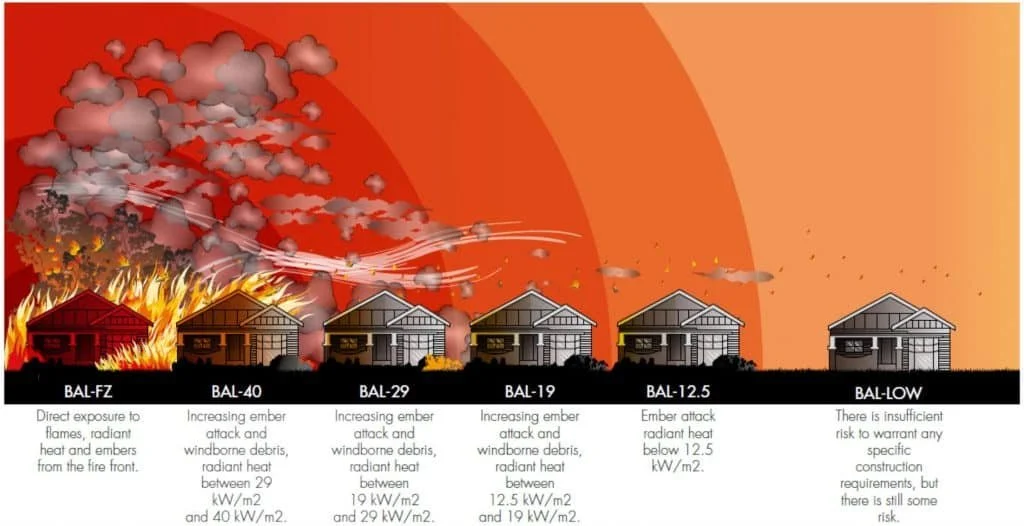
BAL, or Bushfire Attack Level, measures how much radiant heat, ember attack, and potential flame contact a home could experience in a bushfire. The classification ranges from BAL-LOW to BAL-FZ (Flame Zone), with higher levels requiring more resilient construction under AS 3959.
BAL Categories
BAL-LOW: Minimal risk, no specific bushfire construction required.
BAL-12.5 & BAL-19: Primarily concerned with ember attack and low radiant heat levels.
BAL-29, BAL-40 & BAL-FZ: Address higher levels of radiant heat and direct flame contact.
To put this in perspective, exposure to 5 kW/m² can cause second-degree burns and unbearable pain within 60 seconds, while wood can spontaneously ignite between 7.5 and 13 kW/m². These figures highlight why bushfire-resistant design is essential for both life safety and property protection.
A BAL assessment considers the vegetation type, distance to vegetation, slope, and local fire weather conditions to determine which category applies to your site.
AS 3959 and the NCC
AS 3959
AS 3959:2018 is the Australian Standard for building in bushfire-prone areas. It provides construction requirements for each BAL level, from minor ember protection at the lower end to heavy-duty fire-resistant detailing in Flame Zone conditions.
In simple terms, the lower BAL levels (12.5 and 19) focus on sealing against ember entry through careful detailing of roofs, walls and openings. The higher levels (29 and above) add more robust materials, thicker glazing, and non-combustible external finishes to resist radiant heat and potential flame contact.
NCC
The National Construction Code (NCC) references AS 3959 as the standard pathway for compliance in bushfire-prone areas. In Queensland, this standard is adopted through state building legislation. Your certifier will confirm whether the site is designated bushfire-prone and that the design meets the correct BAL construction requirements.
Sunshine Coast Planning Scheme 2014 – Local Bushfire Hazard Overlay
The Bushfire Hazard Overlay Code in the Sunshine Coast Planning Scheme 2014 identifies areas subject to medium or high bushfire hazard, or those within a bushfire buffer zone. Its purpose is to ensure that new development:
avoids or mitigates bushfire risk to people, property and the environment
maintains safe emergency access and defendable space
provides reliable water supply for firefighting
uses low-fuel, fire-resistant landscaping and materials
avoids increasing hazard to surrounding areas
When the overlay is triggered, council typically requires a site-specific Bushfire Hazard Assessment and Bushfire Management Plan prepared by a qualified consultant. This plan guides design, siting, and vegetation management for the life of the dwelling.
DraftRoom’s Step-by-Step Bushfire Design Process
Desktop Mapping Review
Every project starts with a review of local and state bushfire mapping to identify whether the property sits within a hazard area.Engagement of a Qualified Consultant
If the site is affected, we engage a certified bushfire consultant to prepare a BAL Assessment and, when required, a Bushfire Management Plan addressing access, water supply, and vegetation management.Design and Documentation to AS 3959
Once we have the BAL report, we design and document the home to meet the relevant requirements. Our working drawings are itemised and clearly detailed to ensure no construction element is overlooked during building or certification.Integration with Council Requirements
We ensure the design aligns with the Bushfire Hazard Overlay Code, including setback, access, and landscaping expectations.Builder and Certifier Coordination
We collaborate with builders and certifiers so the design intent, materials and AS 3959 measures are clearly understood before construction begins.
Key Design Strategies We Use
Siting and Setbacks to reduce exposure to surrounding vegetation.
Simple, compact roof forms that minimise ember traps.
Bushfire-resistant materials including non-combustible claddings, metal roofing and BAL-rated windows.
Accessible water storage with compliant fittings for firefighting crews.
Low-fuel landscaping using council-approved species.
Practical access design to ensure safe evacuation and emergency service entry.
Frequently Asked Questions
Will my home look overly defensive?
Not at all. With good design, bushfire-resistant features are integrated naturally through material choice and detailing, not heavy fortification.
Can my BAL rating be reduced?
Possibly. Adjusting siting, setbacks or vegetation may lower the BAL. We assess this early with your bushfire consultant to find the most balanced outcome.
Do all sites in the overlay need a bushfire plan?
If your site is mapped in the overlay, council generally requires a Bushfire Hazard Assessment and Management Plan from a qualified professional to accompany your application.
Conclusion
Designing in a bushfire area requires precision, experience and collaboration. At DraftRoom, we combine strong knowledge of the NCC, AS 3959 and the Sunshine Coast Planning Scheme to deliver safe, compliant homes that perform under pressure and still look exceptional.
Our detailed, step-by-step approach ensures every element is considered, documented and coordinated. When safety and quality matter most, you can trust DraftRoom to deliver both.
References
Australian Building Codes Board – NCC 2022 Bushfire Provisions
Australian Standard AS 3959:2018 – Construction of Buildings in Bushfire-Prone Areas
CSIRO – Bushfire Best Practice Guide
Geoscience Australia – BAL Methodology and Training
Sunshine Coast Planning Scheme 2014 – Part 8 Section 8.2.4 Bushfire Hazard Overlay Code (PDF)